5,000-Year-Old Burial of Potential Human Sacrifice Found in Ancient Kiln in Germany
Excavation Reveals Secrets of the Corded Ware Culture and the Mysteries of Ancient Rituals
A Descendant of the Past: A Remarkable Discovery
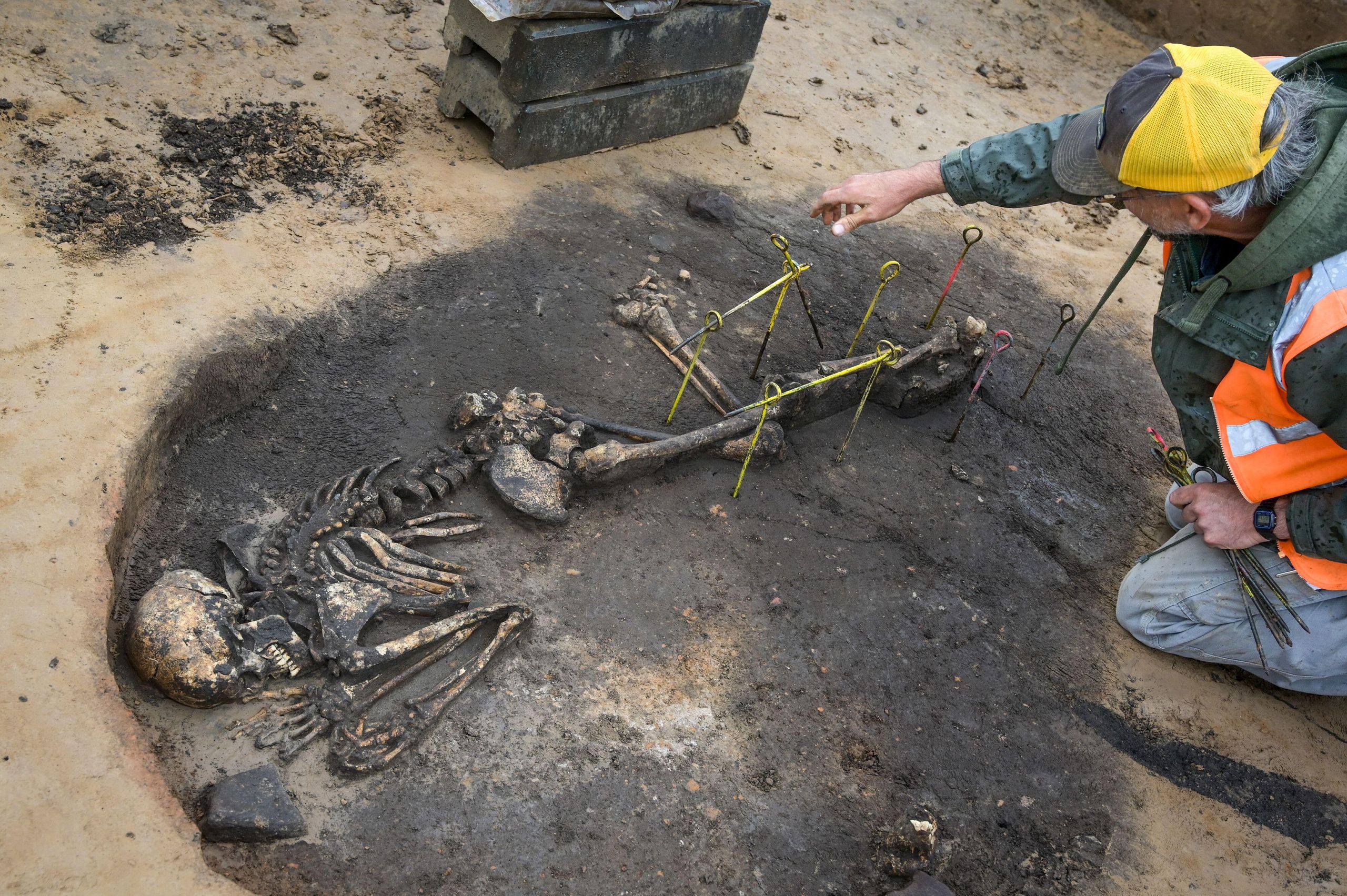
Archaeologists in Germany have made an extraordinary find: the burial of a man, believed to be about 25 years old at the time of death, in an abandoned kiln dating back nearly 5,000 years. This unique discovery was made during the construction of a power line near Gerstewitz, a village in central Germany, as reported by the State Office for Heritage Management and Archaeology (LDA) Saxony-Anhalt.
Image of archaeological site:

The Corded Ware Culture: A Glimpse into History
The man belonged to the Corded Ware culture, a group that thrived across Northern Europe from approximately 2900 to 2050 B.C. This culture is known for its distinctive pottery adorned with cord-like impressions. In their burial customs, men were typically laid to rest on their right sides and women on their left, with all interred in a crouched position facing south. However, this burial diverges from the norm, prompting intrigue among experts.
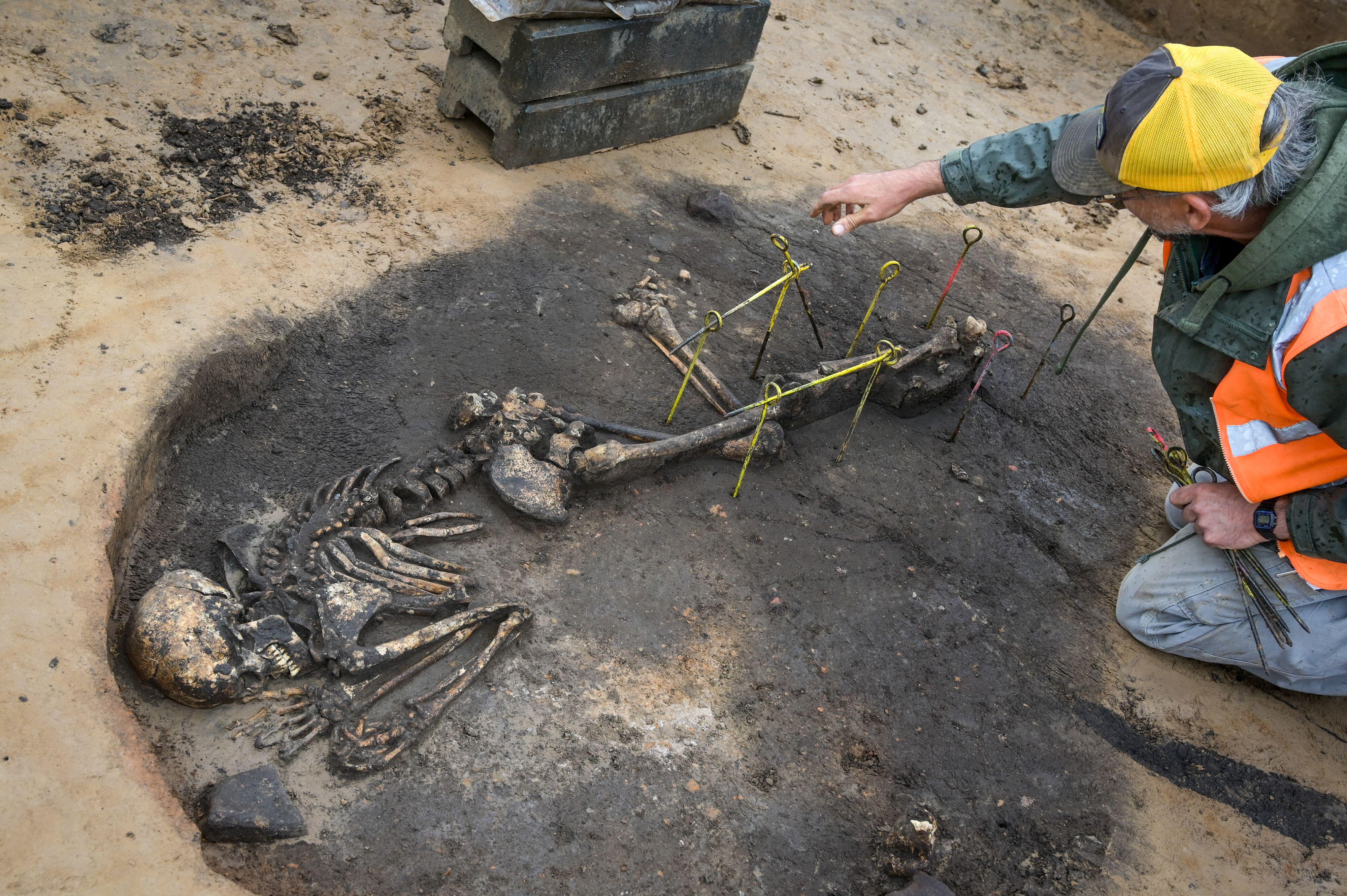
Buried not in a traditional grave but rather in a kiln pit, the skeletal remains of the man were discovered in a position that suggests he was carefully placed rather than randomly disposed of. The kiln, which had likely been used for burning materials such as wood or clay, hints at a past filled with ritualistic significance.
Image of Corded Ware pottery:
Mysterious Injuries: Theories About the Cause of Death
Upon examination, it was found that the man's skull bore signs of injury, leading to several hypotheses regarding his demise. As Oliver Dietrich, an archaeologist with the LDA Saxony-Anhalt, notes, the injury could potentially indicate violence, suggesting the man may have been murdered. Alternatively, he could have fallen victim to a long-forgotten battle during the Copper Age. However, the most gripping theory is that he was a human sacrifice, a notion supported by the context of his burial.
Curiously, archaeologists have uncovered contexts where kiln pits contained animal bones believed to be sacrificial offerings to deities unknown to us. Thus, this recent find adds weight to the argument of ritualistic purposes behind the burial.
Rituals of the Past: A Continued Exploration
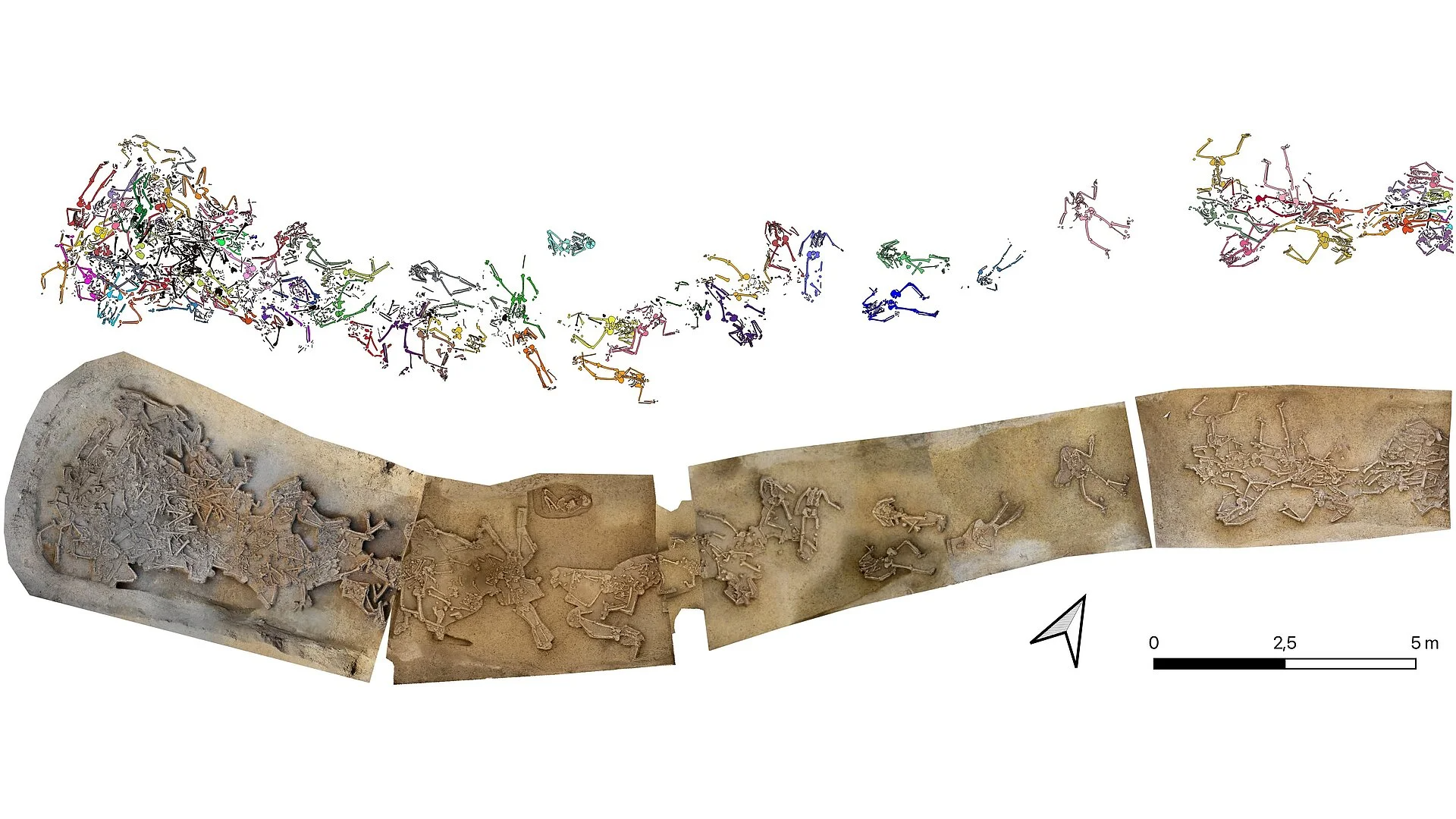
This is not an isolated case; the region surrounding Gerstewitz has yielded additional sites that reflect its deep historical significance. Just last year, archaeologists discovered a series of pits filled with animal bones, human skulls, and intact ceramic pots, all sealed beneath layers of burnt structures. Such findings contribute to the broader understanding of the area, indicating continuous occupation spanning over 6,000 years.
Image of excavation site and finds:
Looking Ahead: Future Research and Discoveries
As more excavations proceed until 2027 in connection with the power line project, archaeologists are hopeful for further insights into the lives and customs of the Corded Ware culture. Laboratory analyses are expected to reveal additional details about the grave's occupant and the larger context of the burial practices of the time.
As researchers continue to uncover the layers of history embedded in this landscape, the stories and mysteries of the past come alive, inviting us to ponder the lives of those who walked the earth long before us.