Jesse Thaler Takes the Helm of MIT's Laboratory for Nuclear Science
A New Era of AI-Driven Discovery in Particle Physics
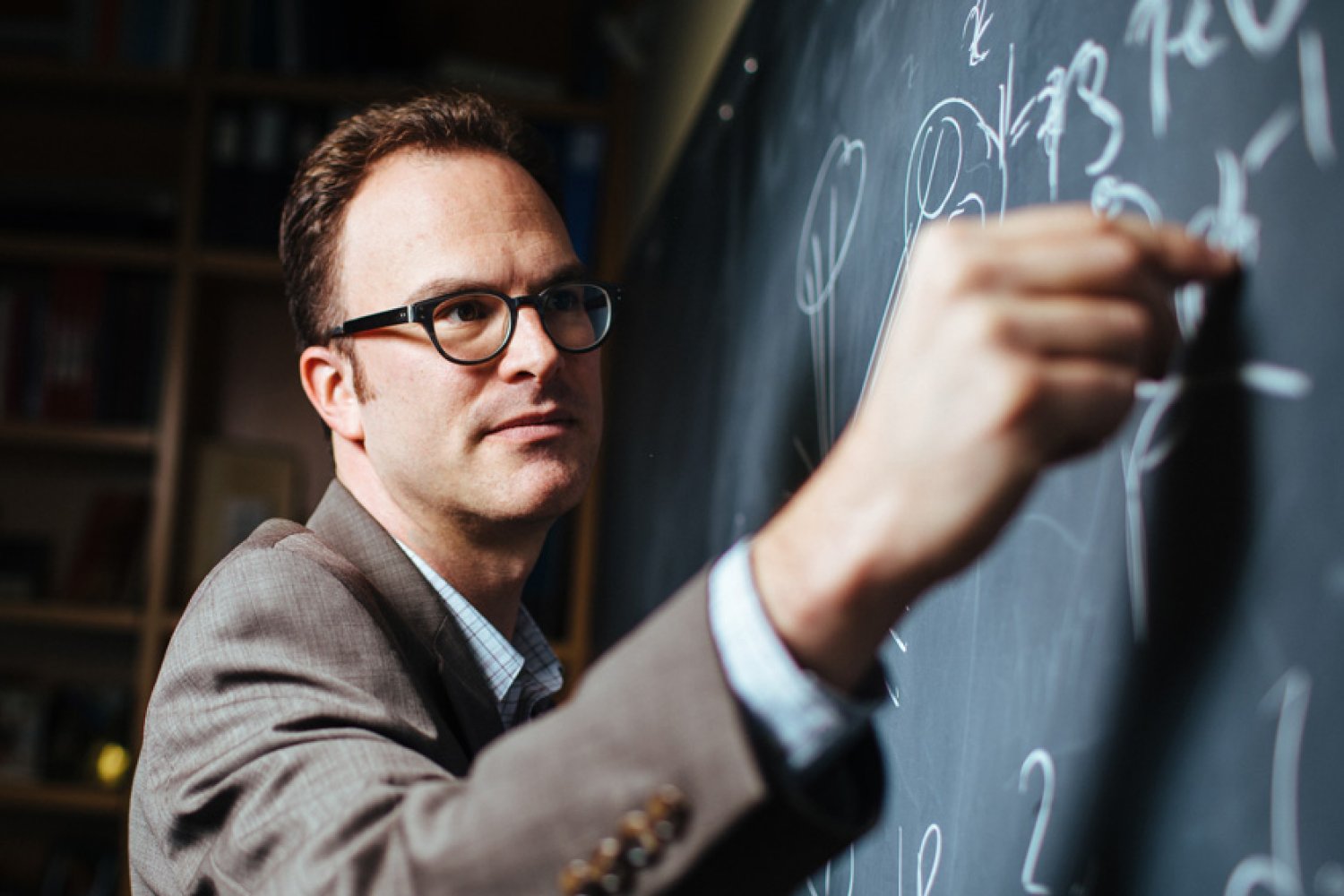
Professor Jesse Thaler is Appointed as Director of the MIT Laboratory for Nuclear Science
In an exciting development for the field of theoretical particle physics, Professor Jesse Thaler has been appointed as the new director of the MIT Laboratory for Nuclear Science (LNS), effective August 1. Thaler succeeds Professor Bolek Wyslouch, who has admirably led the laboratory for the past decade.
Thaler, a renowned theoretical particle physicist, is celebrated for his innovative work that merges quantum field theory with machine learning. His research often addresses some of the most pressing questions in fundamental physics, a fact highlighted by Nergis Mavalvala, dean of the MIT School of Science. Mavalvala emphasized, "In his research, Jesse has done pioneering work on particle jets at the Large Hadron Collider and is a leader in combining AI and machine learning with fundamental particle physics. The collaborative nature of his research will propel the Laboratory for Nuclear Science into a new era of AI-driven discovery."

The Intersection of AI, Physics, and Collaborative Research
Currently serving as the William and Emma Rogers Professor of Physics in the MIT Center for Theoretical Physics — a Leinweber Institute (CTP-LI) — Thaler has also directed the National Science Foundation (NSF) AI Institute for Artificial Intelligence and Fundamental Interactions, or IAIFI, which has recently been renewed for another five years. His dual roles position him uniquely to integrate AI into nuclear science research endeavors.
As Thaler steps into his new role at LNS, he acknowledges the rapid advancements in AI technology and its growing applicability in particle physics. "In my own field of particle physics, researchers are developing cutting-edge AI algorithms to handle the data deluge from collider experiments and to perform complex theoretical calculations. This work has direct implications for discovering new physics and the algorithms themselves are emerging as valuable tools across various scientific disciplines," said Thaler. His vision is to harness these AI-driven capabilities to unlock new physics discoveries that could reshape our understanding of the universe.
Innovation and Education at the Forefront
At IAIFI, Thaler has championed initiatives that bridge the domains of physics and AI through education and research activities. This includes the establishment of a doctoral program in physics, statistics, and data science, alongside dedicated postdoctoral fellowships aimed at nurturing early-career researchers in interdisciplinary work. "Giving young scientists space to build connections across domains, universities, and career stages has been transformative within IAIFI," Thaler remarked. He is eager to replicate this framework at LNS as its steering vision.
Under Thaler's guiding hand, LNS is also set to align with the Department of Energy’s Genesis Mission, emphasizing AI-enabled scientific discovery as a cornerstone of future research projects. Established in 1946, LNS has evolved to encompass a wide range of subjects spanning from cosmology to quantum information science.

Impactful Philanthropy and the Future of Theoretical Physics
As the head of LNS, Thaler will oversee the continued development of CTP-LI, which received a significant donation from the Leinweber Foundation to create a network of theoretical physics research institutes. This philanthropic effort, noted by the Science Philanthropy Alliance, marks an unprecedented commitment to the advancement of theoretical physics research.
Thaler earned his PhD in physics from Harvard University in 2006 and holds a BS in math/physics from Brown University. His academic career includes a fellowship at the Miller Institute for Basic Research in Science at the University of California at Berkeley, and he joined the MIT faculty in 2010.
With Thaler at the helm, the LNS is poised to enter an invigorating phase of research and exploration, merging the realms of theoretical physics and artificial intelligence to illuminate the mysteries of the universe.