MIT Engineers Perfect Method for Growing Artificial Blood Vessels
A breakthrough technique harnessing mechanical stretching to engineer precise vascular networks for living tissues.
Revolutionizing Tissue Engineering
In a groundbreaking advance, engineers at the Massachusetts Institute of Technology (MIT) have unveiled a precise method for growing artificial blood vessels. This innovation not only holds promise for regenerative medicine but could redefine the future of organ transplantation.
Publication Date: July 14, 2026
Living tissues and organs derived from cells aim to replace damaged ones. Recent progress has seen artificial muscles, livers, and even skin cultivated successfully. However, a critical challenge remains unsolved: creating accurately patterned networks of blood vessels intricate enough to support these artificial tissues. Without the proper vascular system to deliver nutrients, any tissue, no matter how lifelike, will be non-functional.

Innovative Approach to Blood Vessel Growth
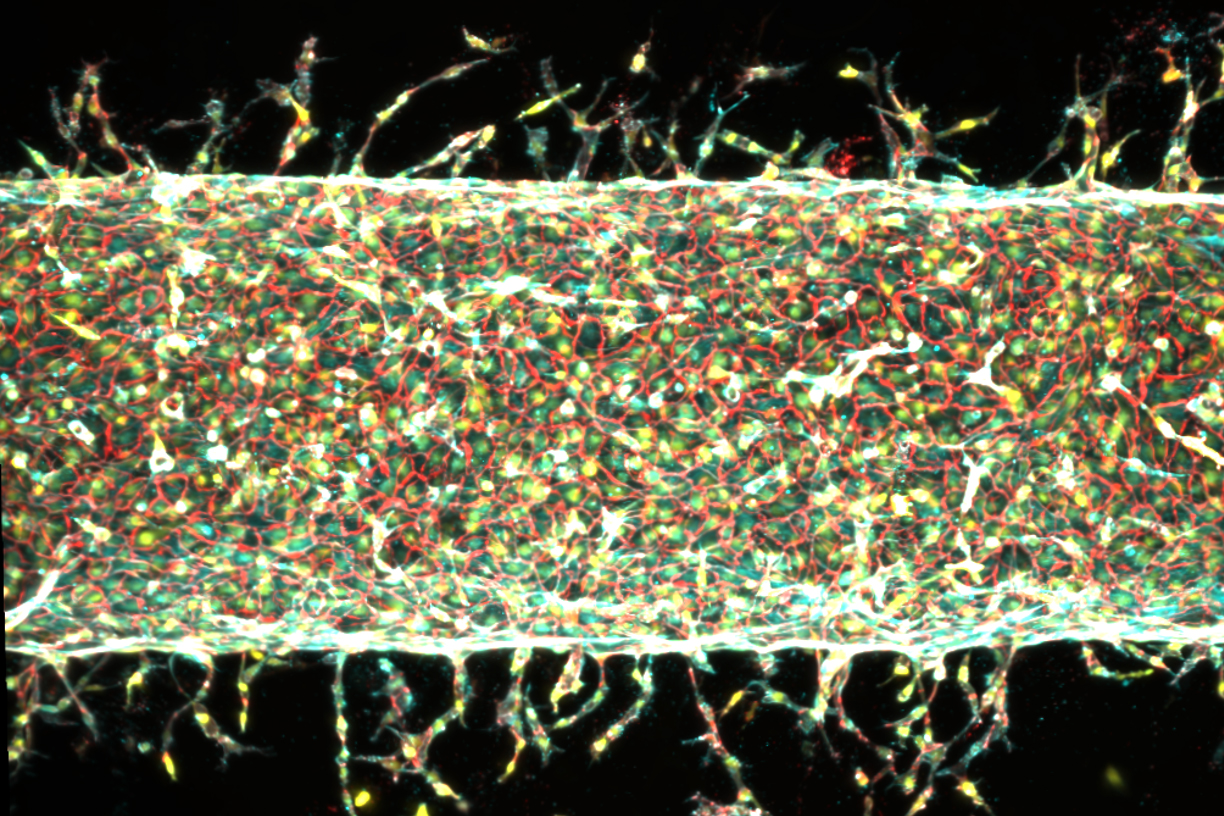
The MIT team has developed a technique where blood vessel growth can be controlled through mechanical stretching. By creating a "blood vessel on a chip" that includes a central artery made from human endothelial cells placed in a nutrient-rich gel with a small embedded magnet, they discovered that applying external magnetic forces triggered the growth of tiny capillaries.
Through their experiments, the researchers were able to manipulate the main artery's expansion and flexion, ultimately guiding the growth patterns of new vessels into specific directions. “Healthy tissues depend on organized blood vessel networks,” remarked Ritu Raman, an associate professor at MIT and co-lead author of the study.
This discovery, outlined in the Proceedings of the National Academy of Sciences, paves the way for reliably engineering blood vessels and programming their growth characteristics.

The Precision of Mechanical Cues
Current fabrication techniques struggle to create vascular structures as intricate as the human body's network of capillaries. While 3D printing has made strides, its precision remains inadequate for such delicate work.
That said, Raman's team previously succeeded in a different domain—using physical movement to affect cell growth on chips laden with nutrients and growth factors. They hypothesized that similar mechanical exercises could be applied to vascular engineering.
The implications of their work may soon help in treating serious medical conditions by providing a solution for engineering vascularized tissues for transplant or repair, especially in areas suffering from diseases that compromise blood flow.

The Mechanism of Action
By experimenting with varying degrees of stretching and jostling the artery, the team noticed significant variations in vessel generation. For instance, while a five percent stretch led to increased capillary development, a greater stretch—15 percent—yielded fewer but longer vessels.
“Mechanical forces play a crucial role in our bodies,” stated Raman, reinforcing the importance of movement and mechanical stimuli for tissue growth. This discovery opens up new avenues for research into how mechanical cues can be applied in regenerative medicine.
Future Implications
As scientists and engineers continue to delve deeper into the mechanisms underlying vascular growth, the integration of this technology into clinical settings represents a monumental leap in the realm of tissue engineering. The research may eventually deliver engineered tissues capable of restoring lost functions due to diseases or injuries.
In a world increasingly demanding innovative healthcare solutions, the ability to fabricate functional blood vessels may lead us closer to a future where artificial organs can be crafted on demand, responding precisely to individual patient needs.