Giant, Milky-Green Vortex Swirls Across Massive 'Cryptodepression' Lake in Southern Europe
A Stunning Astronaut Photo Reveals Nature's Intricate Patterns on Lake Skadar
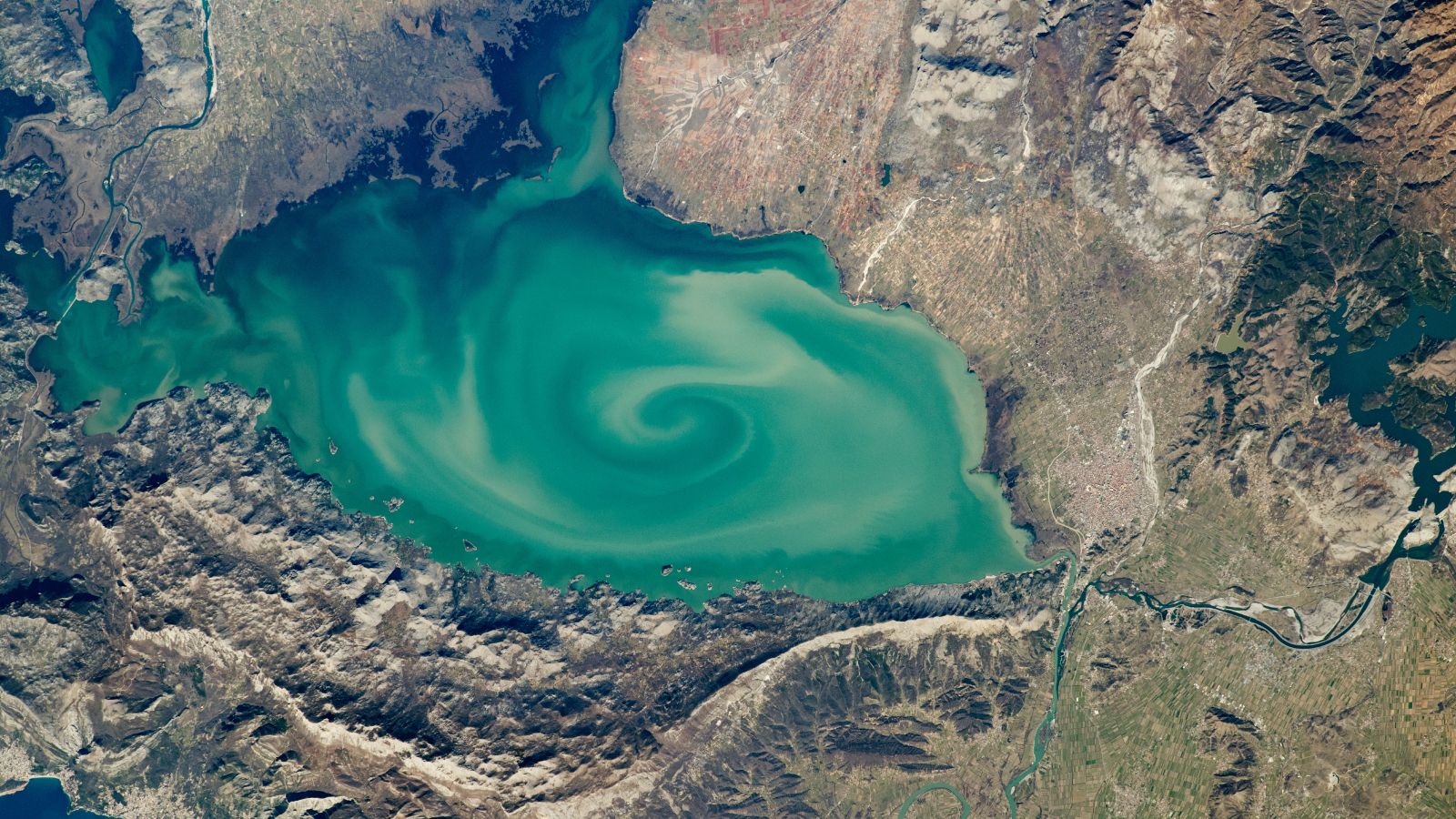
A Vortex of Natural Beauty
In a breathtaking display of nature's power and beauty, an astronaut aboard the International Space Station captured a stunning photo of a massive, milky-green vortex swirling on the surface of Lake Skadar, located on the border between Montenegro and Albania. The image showcases a cloud of sediments forming captivating patterns reminiscent of blooming algae, although it primarily consists of limestone and dolomite particles.

Geographical and Geological Significance
Lake Skadar holds the title of the largest lake in Southern Europe, with a surface area fluctuating between 140 and 200 square miles (360 to 520 square kilometers). This unique water body is split 65%-35% in favor of Montenegro, where the stunning western shore is adorned with rugged mountain ranges known as the Dinaric Alps. To the southeast, Albania encircles the lake, allowing for a combined ecological richness.
Interestingly, Lake Skadar is categorized as a "cryptodepression," meaning the lake's floor lies even below sea level. Formed millions of years ago, this karst lake was once part of a cave system that collapsed, flooding the area.

Water Dynamics at Play
During late winter and early spring, the snowfall from the Dinaric Alps melts, leading to a rise in the lake's water levels. This seasonal change often brings forth a milky-green substance as sediments are stirred into a vortex due to wind currents and the natural inflow and outflow of water between the major rivers governed by the lake.
The primary sources of water for Lake Skadar include the Morača River from the northwest, while its main outlets are the Bojana and Drin rivers, flowing toward the Adriatic Sea. These rivers contribute to the lake's unique chemical composition, supporting an astonishing array of marine biodiversity.
A Biodiversity Hotspot
Incredible for its biological variety, Lake Skadar is a protected area recognized for its significance in wildlife conservation. It is particularly vital for avian species, providing a sanctuary for over 280 types of birds, notably the Dalmatian pelican and several endemic bird species. The lake is also home to a multitude of freshwater snail species, boasting the highest diversity of any lake globally.

Historical Context
Deeply entwined with history, the lake has witnessed numerous significant events, including the sinking of a paddle steamboat named Skanderbeg by local partisans during World War II. The remnants of this vessel occasionally surface when water levels are lower, adding a hint of historical intrigue to the natural landscape.
Lake Skadar's enchanting beauty and ecological importance make it a fascinating subject not only for scientists and environmentalists but also for anyone captivated by the breathtaking wonders of our planet.